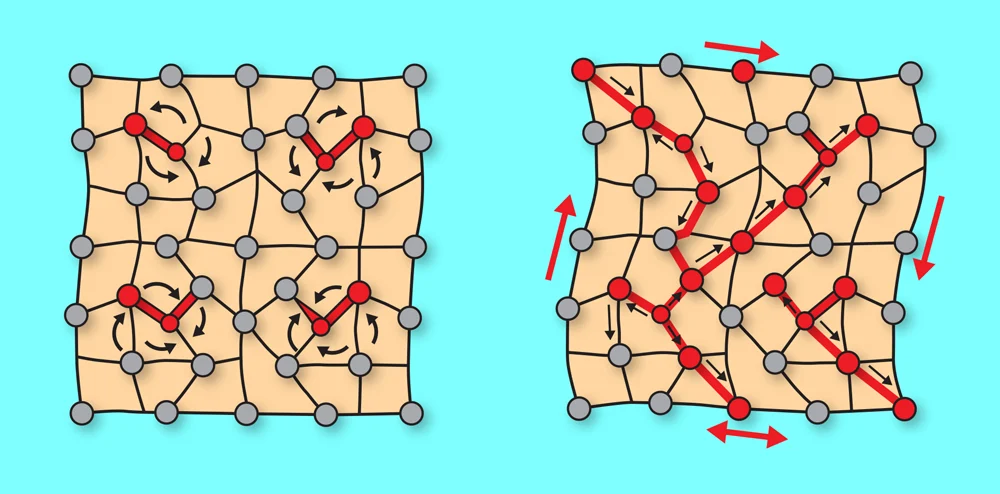
We find out that when the building blocks of an active material become more active, the structure as a whole may actually become less active. Published in PRX and featured in a Physics Viewpoint by Tzer Han Tan!
Machine Materials Lab
We find out that when the building blocks of an active material become more active, the structure as a whole may actually become less active. Published in PRX and featured in a Physics Viewpoint by Tzer Han Tan!
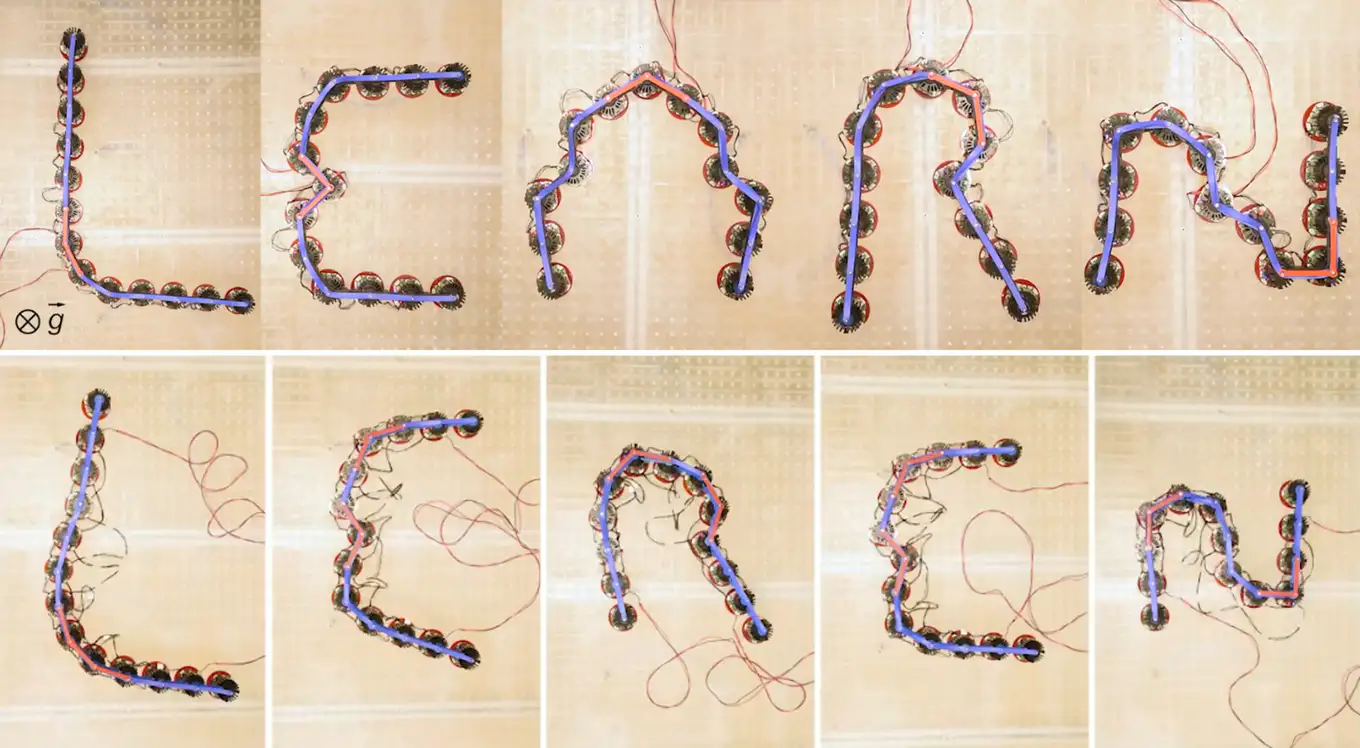
We devise active metamaterials that don’t just learn to change shape, but can autonomously adapt their shape-changing strategy, perform reflex actions and move around like living systems do. Published in Nature Physics and featured in a News and Views article by Karen Alim!
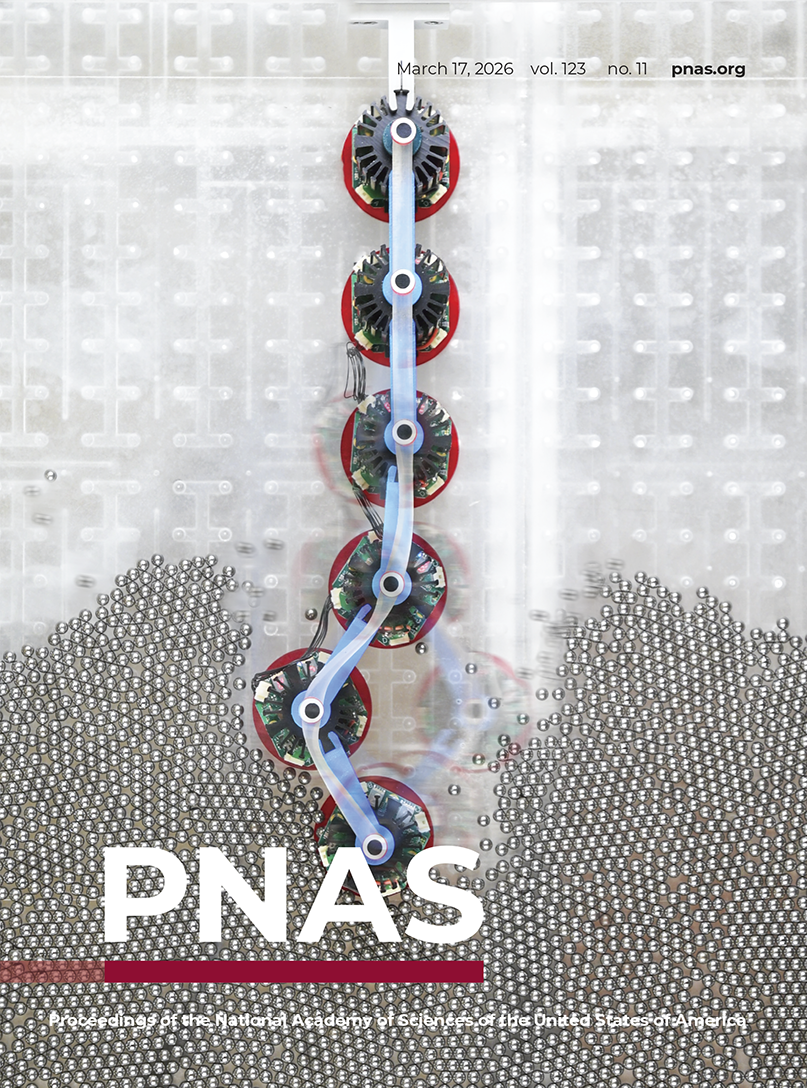
We discover that the buckling of non-reciprocal beam host critical exceptional points that can be leveraged for robotic functionality. Published in PNAS!
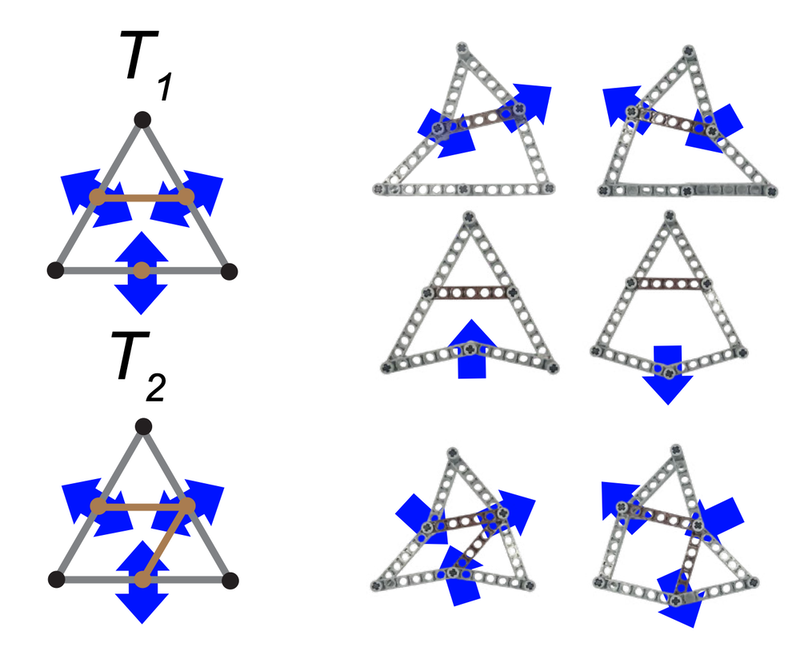
We have introduced a new type of combinatorial metamaterials that can be designed to solve a problem in matrix algebra. Out in PRL!
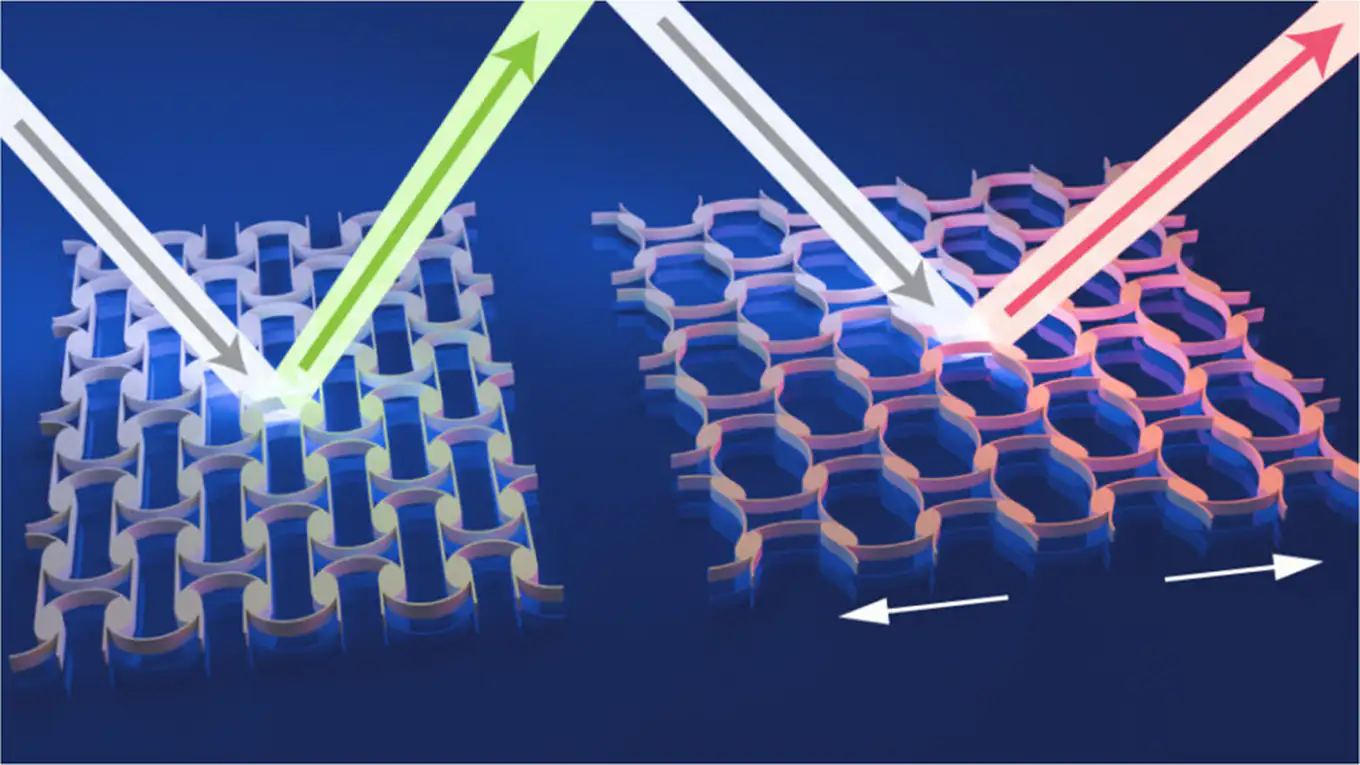
We have developed a material that can reflect different colours of light, depending on how it is stretched. Out in ACS Photonics!
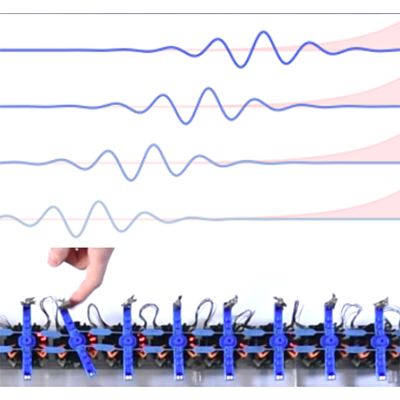
In our latest Physical Review X paper, we discover that breathing solitons can be driven by non-reciprocity and propagate for a long time. This is a first in highly dissipative media!
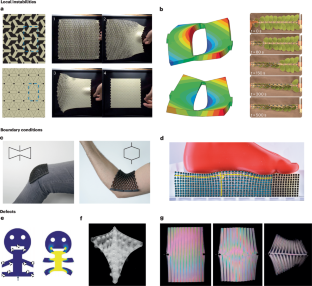
In this review published in Nature Review Materials, we unify historical and recent developments in the field of shape-morphing metamaterials.
We used data driven techniques such as Convolutional Neural Networks and Genetic algorithms to find ultra rare combinatorial designs. Instead of directly searching the vast combinatorial design space for the perfect material, we split the design process in two: first, generate designs with rich, general mechanical responses; second, combine and fine-tune to achieve the desired response. Out in Physical Review Research!

Inspired by how brainless lifeforms such as starfish and slime moulds move around, we have constructed ‘odd’ objects that autonomously roll, crawl and wiggle over unpredictable terrain, including uphill and over obstacles placed in their way. These odd elastic metamaterials solve a key problem of robotic locomotion. Out in Nature!

We’ve introduced plasticity as a design tool to create metamaterials that are simultaneously lightweight, strong, and dissipative! Out in Nature!


