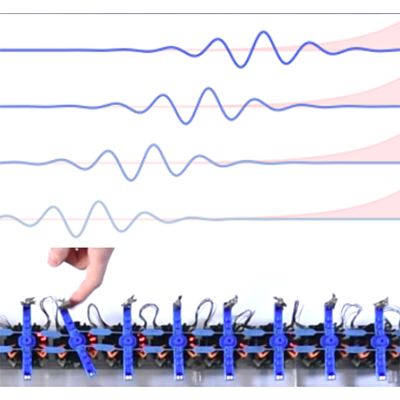
In our latest Physical Review X paper, we discover that breathing solitons can be driven by non-reciprocity and propagate for a long time. This is a first in highly dissipative media!
Machine Materials Lab
In our latest Physical Review X paper, we discover that breathing solitons can be driven by non-reciprocity and propagate for a long time. This is a first in highly dissipative media!
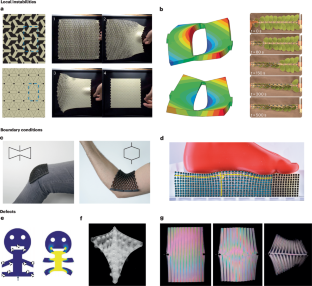
In this review published in Nature Review Materials, we unify historical and recent developments in the field of shape-morphing metamaterials.
We used data driven techniques such as Convolutional Neural Networks and Genetic algorithms to find ultra rare combinatorial designs. Instead of directly searching the vast combinatorial design space for the perfect material, we split the design process in two: first, generate designs with rich, general mechanical responses; second, combine and fine-tune to achieve the desired response. Out in Physical Review Research!

Inspired by how brainless lifeforms such as starfish and slime moulds move around, we have constructed ‘odd’ objects that autonomously roll, crawl and wiggle over unpredictable terrain, including uphill and over obstacles placed in their way. These odd elastic metamaterials solve a key problem of robotic locomotion. Out in Nature!

We’ve introduced plasticity as a design tool to create metamaterials that are simultaneously lightweight, strong, and dissipative! Out in Nature!

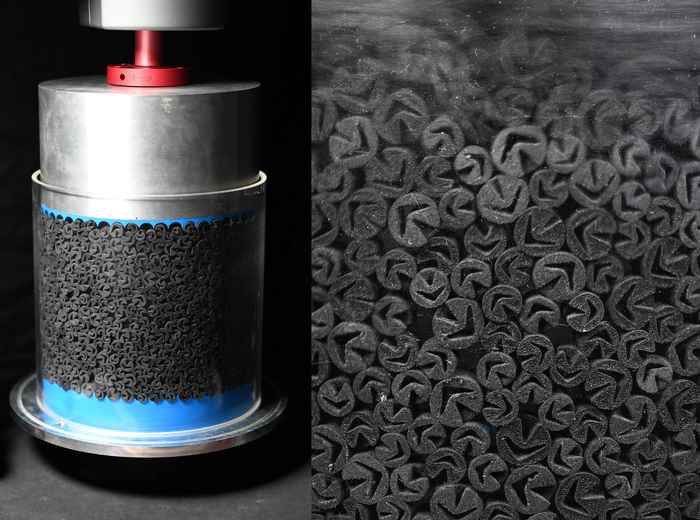
In a PNAS article, we’ve introduced granular metamaterials made from auxetic particles. They are softer and flow more easily and less intermittently than ordinary granular packings!
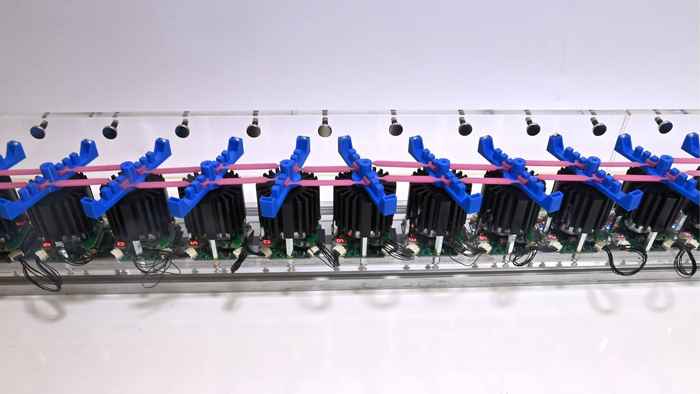
We discover a way to achieve an achieve an endless domino effect! We show that non-reciprocity drives solitons and antisolitons towards the same direction. This allows us to send trains of solitons and antisolitons without having to manually reset the material. Out in Nature.
We introduce viscoelastic kirigami whose response depend on strain rate. We observe the emerge of diffusive kinks. We use those kinks to achieve basic mechanical tasks such as shape morphing, sensing and moving objects. Out in Nature Communications!
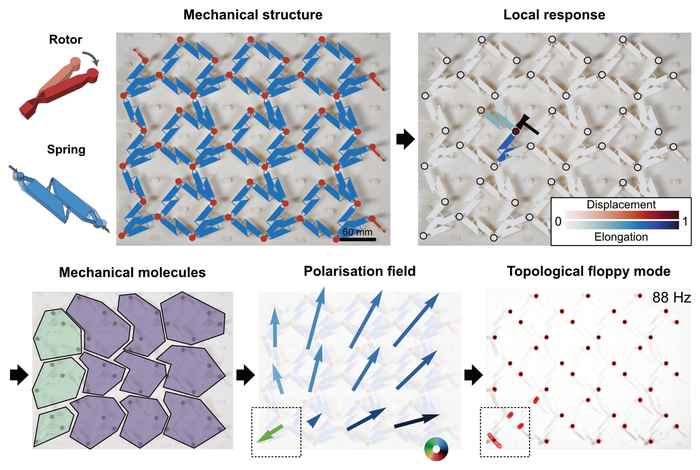
In a PNAS article, we have demonstrated a model-free method for identifying topology, enabling the discovery of new topological materials using a purely experimental approach.
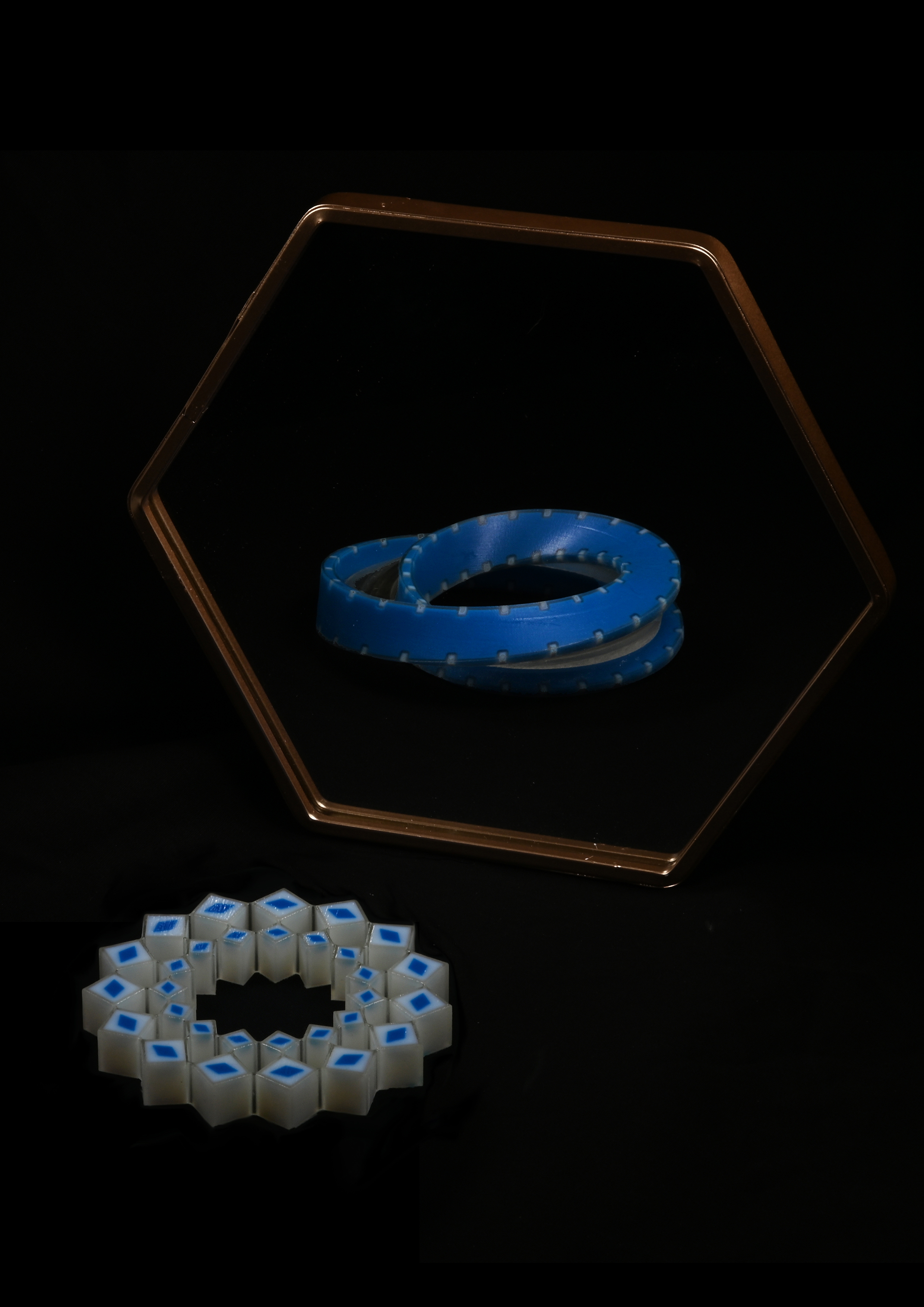
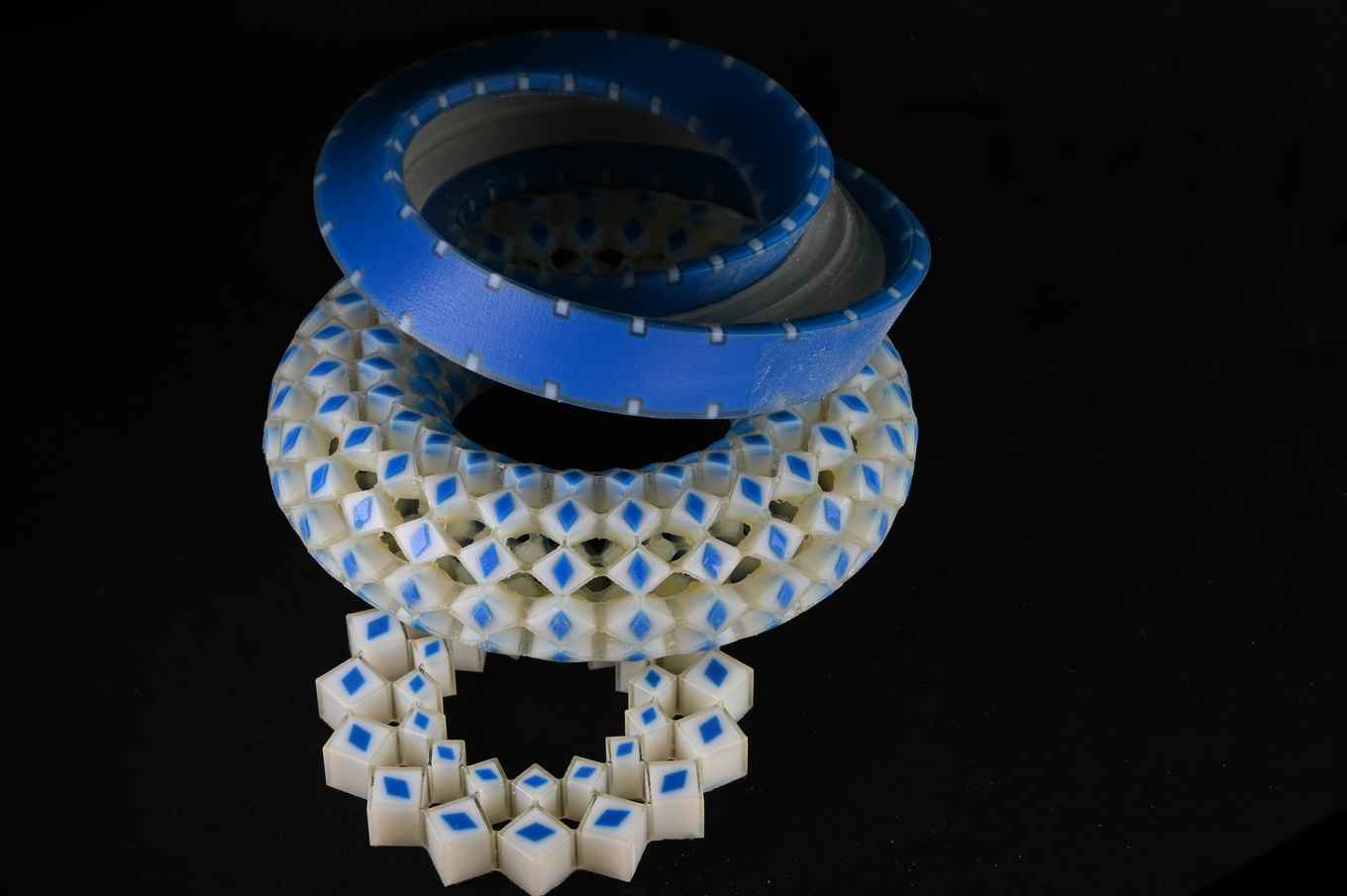
We create metamaterials with built-in frustration, show that they are exhibit a topological property: non-orientable order. We further demontrate that non-orientable order helps to create programmable non-commutative response. Published in Nature.
 Corentin Coulais